





























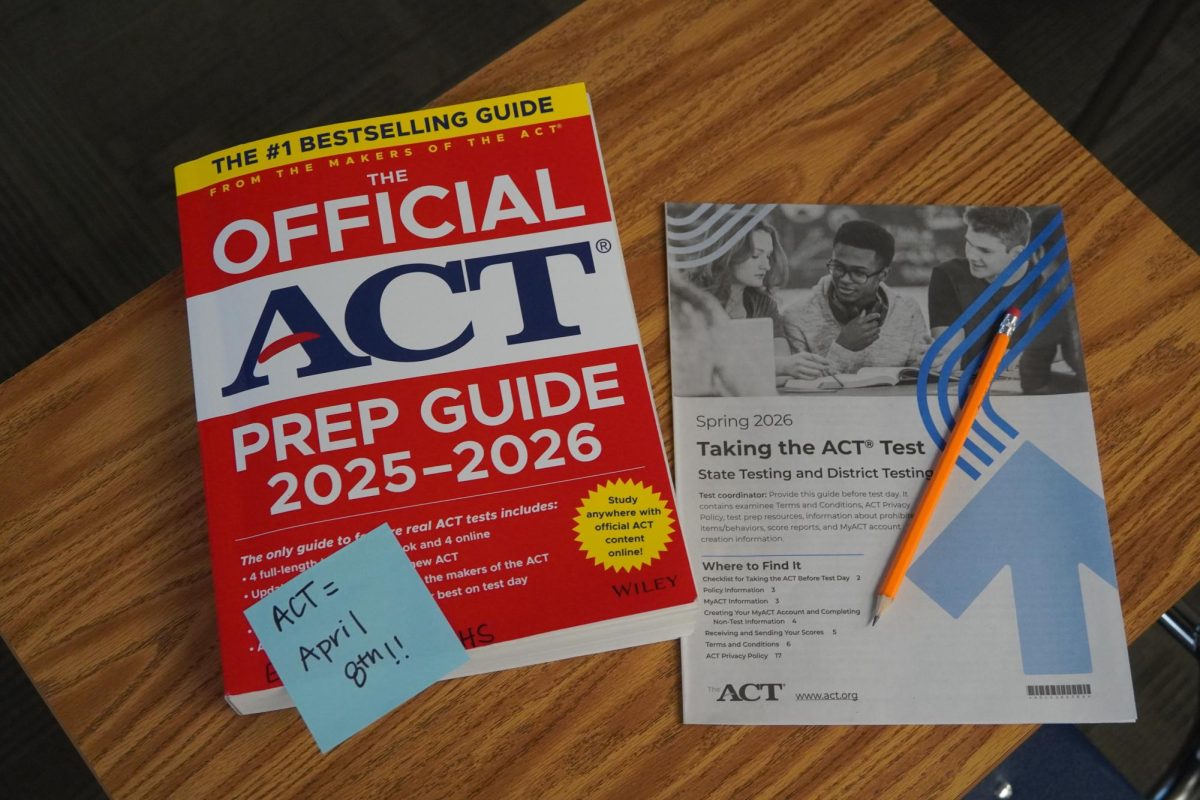
The first half of April is full of studying for juniors here at Santa Fe. Three tests are coming up which include State Science, ACT and State U.S. History.
April 6- State Science Test
April 8- ACT (All other grades will be virtual)
April 14- State US History Test
The ACT test covers English, math, reading, science and writing (optional). It is usually taken in the spring for only the 11th grade. While people pay to take the ACT early, when you are a junior, it is free of cost through a state contract. The scores are used for college admissions and for others to see your academic readiness level.
Scores can also be used to get you scholarships which will help greatly in your college years. Each section has a limited amount of time; English is given 35 minutes, math is 50 minutes, reading is 40 minutes, science is 40 minutes and writing is 40 minutes.
Click here for tips and more information on the ACT.
The State U.S. History test is mandatory for graduation. Key topics to keep in mind include the Progressive Era, World Wars, the Great Depression, the Cold War, the Civil Rights Movement, the Tulsa Race Riot, etc.
Similar to the State U.S. History, the State Science test is also mandatory for graduation. This test is also typically taken in the spring.
How to Prepare:
Preparing for these tests are important. It’s also good to have test taking skills because of the time limit given for each section. Having a time limit may trigger some students’ anxiety which is why you need to prepare ahead of time.
Many teachers prepare students in school with ACT practice skills and practice tests.
“I’ve been studying with the ACT prep tests from Mrs. R’s class,” Junior Aiden Henry said.
For the ACT, it is very important to read questions before scanning the passages given. Before test day, it is important to familiarize yourself with the timing and type of questions. Focusing on yourself on the days before the test will also help with preparing mentally. When taking the practice tests, you should analyze your results to focus on your weaker spots. Memorizing formulas for the math section is necessary, as the ACT doesn’t provide those.
With the State U.S. History test students can focus on major points and memorize dates. Also doing practice tests help get you familiar and be able to use your time wisely. Discussing different historical events with peers also would help you remember things you didn’t think of.
Students can prepare for the State Science test by practicing skills such as analyzing data and constructing explanations. which is a way better strategy than memorizing facts. Using the Claim, Evidence and Reasoning for short answers gives you a way better chance at ensuring full points. Instead of just bluntly reading, looking for key points in passages will save time and stress.
Even though this may seem stressful for some students, some see testing as a signal to the end of the year.
“I feel good, I’m excited to get it over with,” junior Michael Swartz said.
While these scores may determine their future paths, the passion and effort behind it matters just as much.