

































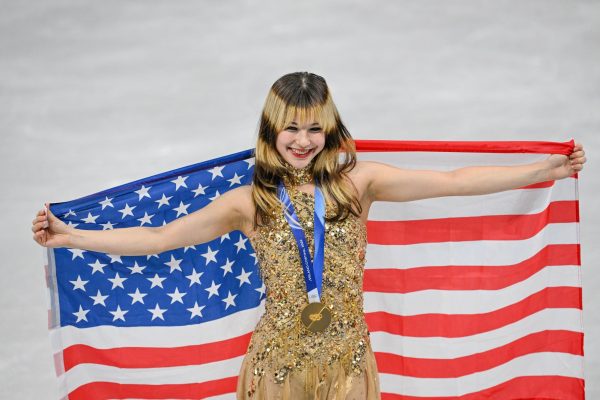
Alysa Liu is a 20-year-old American Olympic figure skater who skated for 11 years before retiring at 16 and ultimately making her comeback at the 2026 Winter Olympics.

At the time, it sounded like the end of one of the most promising careers in American figure skating. Instead, it became the beginning of one of the most inspiring Olympic comebacks in recent history.
At the 2026 Winter Olympics in Milan-Cortina, Liu returned to the ice with a performance that stunned the figure skating world, and even some outside of it. She delivered a near-flawless free skate, landing all seven of her triple jumps and finishing with a career-best score of 226.79 points. That performance secured her the gold medal in women’s singles figure skating.
The victory meant more than just another medal for Team USA. Liu became the first American woman to win Olympic gold in figure skating in 24 years, ending a drought that dated back to Sarah Hughes at the 2002 Winter Games.
But what makes Liu’s moment so compelling isn’t just the score or the medal; it’s the mindset that got her there.
Most Olympic stories follow the same script: train harder, sacrifice everything and chase gold at all costs. Liu’s story is the opposite. She stepped away from the sport entirely because she felt burned out. Instead of forcing herself to keep going, she chose to walk away and rediscover what made her happy.
When Liu eventually returned to skating, the approach was different. According to reports and interviews during the Olympics, she made it clear that she would control her own career decisions, from training schedules to music choices.
That change in mindset showed on the ice. During her Olympic performance, Liu skated with a confidence that looked almost effortless. She smiled, interacted with the crowd and celebrated openly when she finished. Soon after, she was standing on the top step of the Olympic podium.
Athletically, the performance was impressive. Mentally, it was even more powerful.
Sports culture often teaches athletes to push through exhaustion and ignore burnout. Liu’s story suggests something different: sometimes stepping away is exactly what allows someone to come back stronger.
Her journey also sends an important message to younger athletes watching the Olympics. Success does not always mean grinding nonstop toward a goal. Sometimes success means understanding your limits, protecting your mental health and returning when you’re ready.
That mindset clearly resonated beyond the rink. After the Olympics, thousands of fans gathered in Oakland, California to celebrate Liu’s victory and her remarkable comeback.
The celebration wasn’t just about a gold medal. It was about what the moment represented.
In a sport often defined by perfection and pressure, Liu reminded the world that joy can still exist in competition. Her comeback proved that athletes are more than their medals, and sometimes the strongest move an athlete can make is choosing their own path.
That’s the Alysa Liu mindset.