





On Nov. 20, Santa Fe’s Native American Student Association (N.A.S.A) held a dance showcase with professional performers from different tribes to celebrate the Native American Heritage Month.
There are 574 federally recognized Indian tribes in the United States, Oklahoma being home to 39 of the tribes.
The host of the showcase was Cortney Yarholar, member of the Sac and Fox Nation and descendant of the Muscogee Creek, Pawnee and Otoe-Missouria Tribes.
The event began with all the performers dancing on stage to a Grand Entry song, to which the audience joined by dancing and clapping to the beat. A Grand Entry song is a Native American ceremonial musical piece played on drums during the beginning of a Powwow.
Acknowledging Edmond Public Schools staff and administrators that have contributed to the N.A.S.A, the host invited on the stage Santa Fe’s principal Jason Hayes, who is part of the Chickasaw Nation, the N.A.S.A’s adviser, Kevin Thomas, and district administrators, including Superintendent Josh Delich.
One by one, the dancers were introduced on stage to perform five different intertribal dances; these are dances that can be performed by any tribe, however, they vary in the style and roots. For all the dances, the singers played a steady beat on the drums as they sang the song “Crow Hop” a type of powwow music. The steady drumbeat is meant to symbolize heartbeats.
One of the lyrics they sang was “as long as the drumbeat is beating, we’re dancing, you know, we know that we are alive and we are well” as the host, Yarholar, translated.
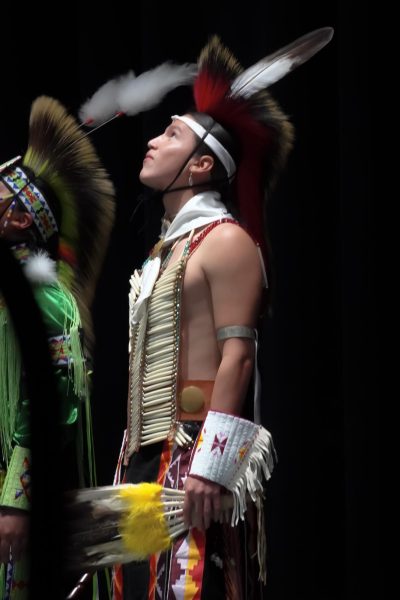
Each dancer wore their regalia, traditional Native American clothing, and moved in harmony with the drumbeat, representing the history of the tribe they come from.
“It’s your spirit moving through you” said Yarholar during the performances. “And so when you watch these dancers, they are dancing from the heart.”
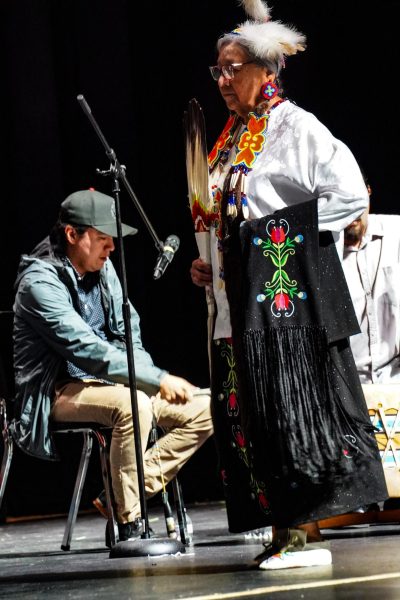
The first dance was the cloth dance, a style of dancing where dancers wear dresses made of cloth. It is performed differently in the north and the south. Patricia Yarholder performed the southern plains version of the dance while 11-year-old Nora Yarholer and sophomore Maddie Factor performed the northern version; this version is also called the scrub dance and originates from the woodland tribes.
Secondly, Nami Yahoo represented the Comanche Nation as she performed the jingle dress dance, a dance that originated from the Ojibwe tribe; this dance involves a zig-zag pattern of light, soft foot movement in rhythm with the drum and the sound of the jingles on her dress.
Yahoo’s jingle dress was a regalia that belonged originally to her aunt and was made by her grandmother. This dress is a traditional Native American dress that has rows of metal cones (jingles). A jingle dress can contain anywhere from 200 to 500 jingles, however, it usually has 365 to represent the 365 days of the year. The dance and the sound of the jingles is considered a form of healing and prayer.
“Whenever you dance you can think about someone that is sick or hurting,” said Yahoo.
Thirdly, Taryn Spotted Bear from the Osage Nation shared her style of the fancy shawl, one of the newest dances for Native American women. During this dance, women wear their shawls over their shoulders and jump and spin around along with the music, mimicking butterflies in flight.
The fourth dance was the Hoop dance, performed by Madison Ficcico from the Lowa tribe. This style originated from the Hopi tribe, who are very connected to the universe and the “circle of life.”
“Within the circle, we all belong,” said the Yarholar. “Nobody is greater than anyone else.”
In the dance, the hoops formed a circle, intertwined with one another, portraying different images, including birds and butterflies.
The men’s division of the event began with the Grass Dance performed by Tracy Tanion Jr, from the Lowa and the Seminole nations of Oklahoma. His tribe resides in Perkins, Oklahoma and is usually called “the gray snow warriors.”
The Grass Dance originated from the Omaha people in Nebraska and was used by the grass dance society of men in the nomadic tribes to sing and dance to stomp the tall grass when they would move their camps. This dance was introduced to the arena by his grandfather, Frank McClellan Senior. The arena is the sacred ground where Native American dancing and ceremonies take place.
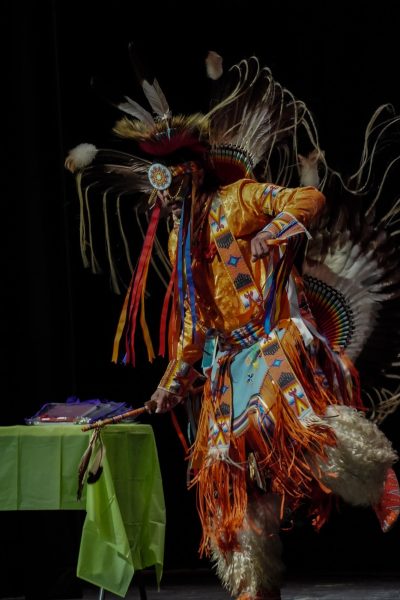
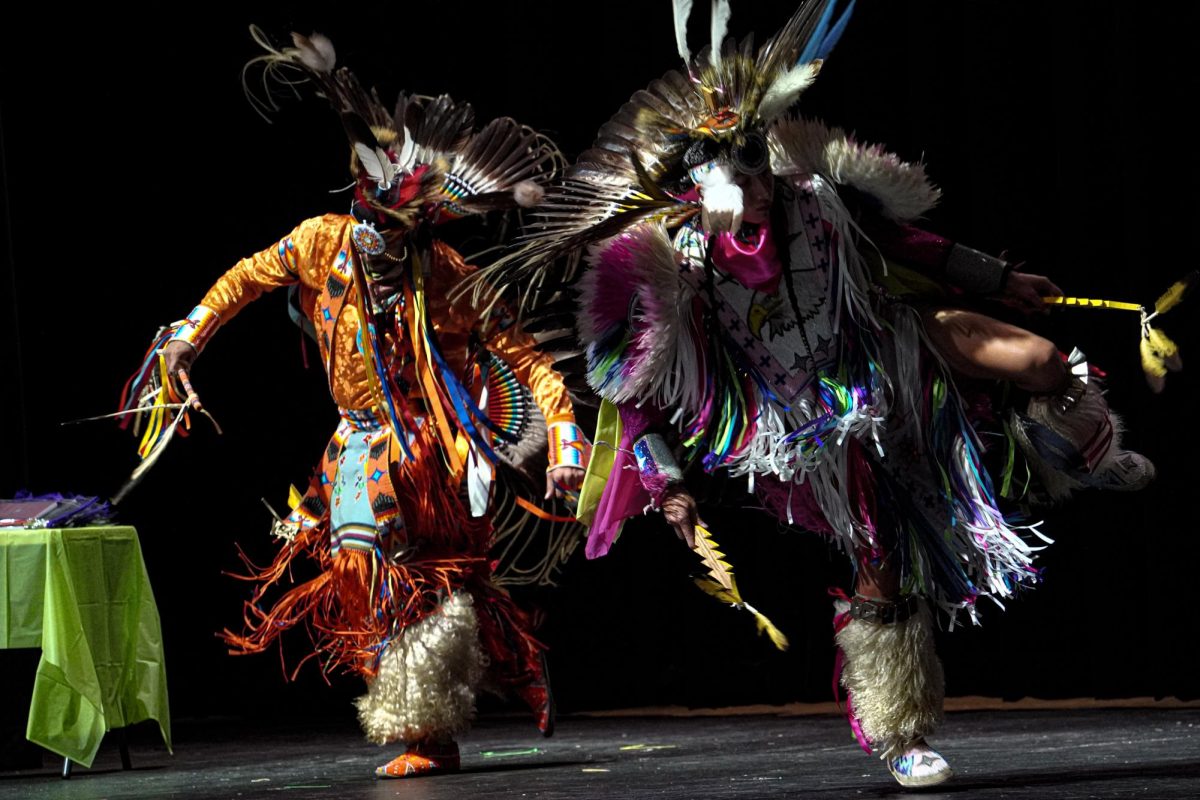
The next category was the men’s fancy feather dance, also known as the “fancy war dance”, performed by Rylan Moore from Otoe-Missouria tribe and Jude Yarholar from The Sac and Fox, Pawnee, Otoe-Missouria and Kiowa tribes. This dance originated from the older war dance which was used to showcase the achievements of the warriors after a battle. The dancers wore brightly colored and feather-heavy outfits called “bustle” and danced with very athletic and fast patterns of moves, timed with the drums.
At the end of the event, the host recognized the Indian Education Department and the Edmond Santa Fe N.A.S.A’s members, specifically shouting out the president Madison Woodward, the vice president Raelle Echo and members Mackenzie Smyth, Marisela Eckiwardy, Maddie Factor, Averie Herl and Camille Franks.
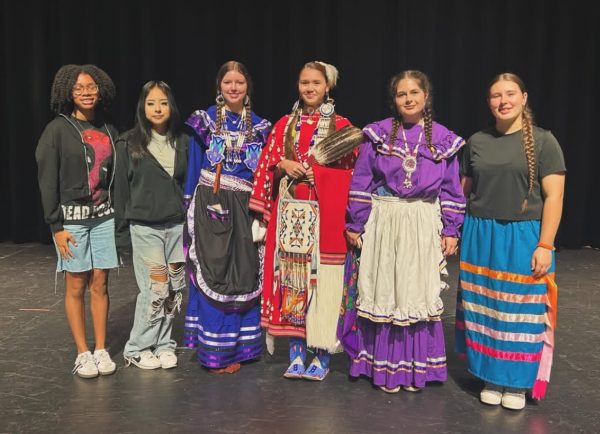
President and junior, Madison Woodward, is part of the Chickasaw and Choctaw nations and part of the “Nashoba” band of Choctaw natives, Nashoba is a Choctaw word that means wolf.
Woodward represented her tribe by wearing her regalia to the event, mostly made by herself and her grandma. She wore a traditional ribbon dress and her beaded apron, which they wear to put different tools to help with their everyday. On her hair she wore floral style beaded hair ties which is a big part of the Chickasaw culture as their land has a lot of flowers on them. On her feet she had her traditional pucker toe moccasins, a type of leather boot popular in the southeastern tribes.
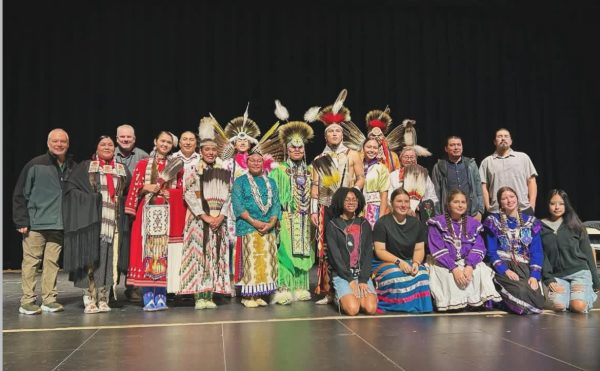
This showcase represented the Native American honor and culture that are passed down from generation to generation.
“It is not going anywhere,” said Tanion. “It is going to stay here for many more generations to come.”
To close up the event, all the dancers danced an intertribal song on stage, showcasing the shared spirit and mosaic of the Oklahoman nations.