




































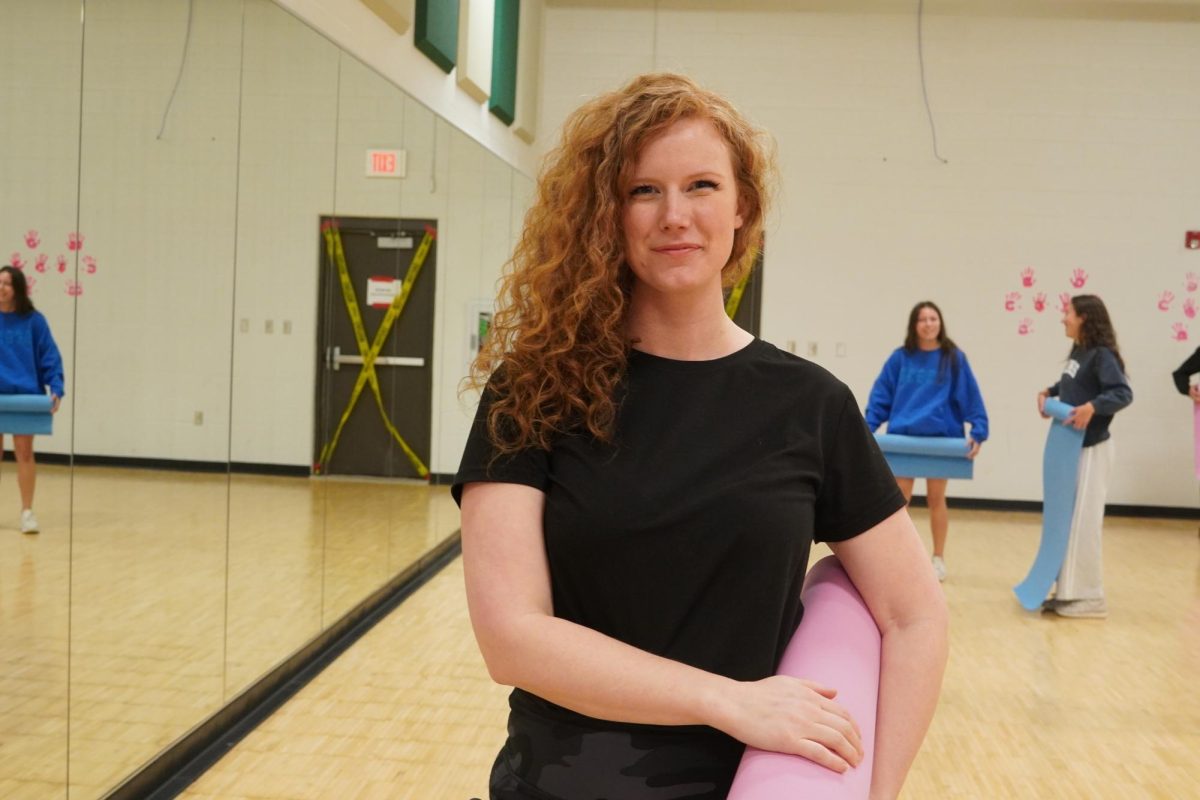
Starting Unit 4, “Stress and Health” of the AP Psychology curriculum, students in Kaitlin Powers’ class practiced positive psychology through yoga and meditation.
Powers had noticed an increase in her students’ stress last semester, which motivated her to assign her class an activity to practice an emotion focused coping skill by meditating for 20 minutes for five days.
At the beginning of the activity, students had to measure their heart rate, then Powers would lead them through a yoga practice to relax their body for meditation.
“The yoga was there to kind of prepare students to get out of their heads and into their bodies,” Powers said. “And that they will be able to just sit with themselves.”
Following the yoga stretch, students closed their eyes and meditated with the company of peaceful, soothing music.
Concluding the activity, Powers got positive feedback from her students as it helped them in their life, making a difference in the way they manage stress.
“They reported overall better mood and resilience for stress in classes and quizzes,” Powers said.
Students also noticed the effects of the meditation on their heart rate and stress levels. Senior Laken Jones, who had been stressed because of a test she took the hour before the activity, noticed the decrease of her heart rate and levels of stress after practicing mindfulness.
“My heart rate was already super high due to stress, so after the yoga session it slowed down a bunch,” Jones said. “It was definitely needed, and I am glad Mrs. Powers chose to do yoga that week.”
With this activity, Powers blended theory with practice to teach her students how calming techniques like yoga and meditation can enhance student’s mental well-being at school and their extracurriculars.